
YOUTH DEVELOPMENT MINISTER INAUGURATES STEERING COMMITTEES
October 14, 2026


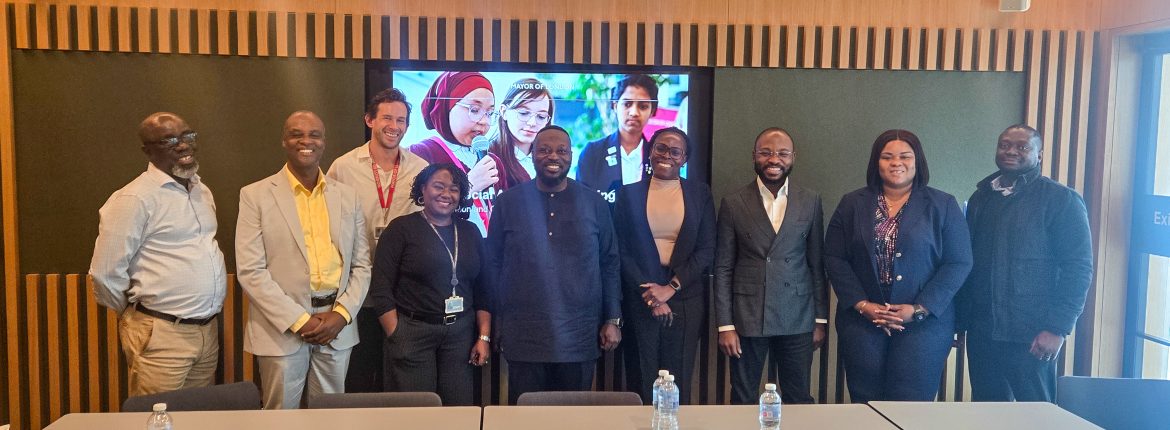
Ministry of Youth Advances Ghana’s Volunteerism Agenda Through UK Study Visit
The Ministry of Youth Development and Empowerment (MYDE) has taken an important step towards the development of Ghana’s National Volunteerism Policy Framework following a four-day study visit to the United Kingdom from 27 to 30 September 2026. The seven-member delegation led by Hon. George Opare Addo, Minister for Youth Development and Empowerment (MYDE), focused on examining how volunteerism can be leveraged to strengthen youth participation, civic engagement, skills development, community action, and employability.
The study visit provided practical insights into how volunteerism has been deliberately woven into youth initiatives and programmes in the UK, rather than being treated as a stand-alone activity. Engagements with the Rio Ferdinand Foundation, Volunteering Matters and the #iWill Movement, the Greater London Authority and the British Council demonstrated how volunteering and social action can help young people develop confidence, leadership, practical skills and experience while contributing meaningfully to their communities.
A major lesson for Ghana is the potential of volunteerism to become an important bridge between youth development and employment. The study engagements highlighted approaches through which young people gain transferable skills, workplace experience, networks and exposure to employers through volunteering. For Ghana, this presents an opportunity to position structured volunteering as part of the response to youth unemployment by creating pathways through which young people can gain experience, demonstrate competencies and transition into employment, entrepreneurship or further training.
The visit also underscored the importance of youth-led social action. The #iWill Movement demonstrated how young people can be supported not merely as beneficiaries of programmes but as leaders and agents of positive change. Its emphasis on youth voice, local alliances, youth ambassadors, community action and organisational commitments offers valuable lessons for Ghana as it seeks to strengthen patriotism, civic responsibility and active citizenship among young people.
Another significant area of learning was the role of the NGO and civil society sector. The UK experience demonstrated the importance of strong partnerships between government, charities, NGOs, community organisations and the private sector in creating and sustaining meaningful volunteering opportunities. For Ghana, the emerging policy framework will need to recognise NGOs and civil society organisations as critical delivery partners while establishing appropriate standards for registration, safeguarding, accountability, monitoring and impact measurement.
The UK study visit has therefore reinforced the Ministry’s conviction that Ghana requires a coherent national framework for volunteerism, supported by appropriate legislation, institutions, sustainable financing, digital systems, partnerships and mechanisms for measuring impact. Such a framework would provide the foundation for moving from fragmented volunteering activities towards a coordinated national volunteerism ecosystem.